

The Prefab Home Market in India Is Bigger Than the Industry Realises
India's residential construction industry still treats prefabricated construction as a niche category, useful for disaster relief, remote worksites or institutional housing, but not something an individual homeowner considers when deciding how to build. Search behaviour suggests the market has already moved past that assumption.
What the Search Data Is Already Showing
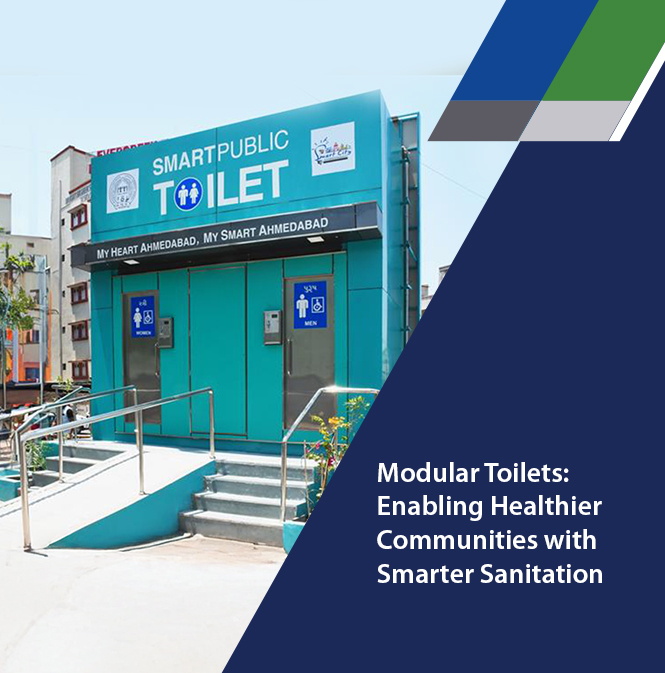
Homeowners are searching for readymade house pricing and prefabricated house options in meaningful volume, well before they speak to a builder or an architect. A large share of that intent is price-led: people comparing what a steel-framed home costs against a conventional brick-and-mortar build before they commit to either path. Alongside it sits a distinct category of product-specific search, portable cabins, container offices, modular sanitation units, that indicates people are actively looking for prefab solutions rather than encountering them by accident. Brand-level search for Tata Steel's prefab offerings sits within this same pattern: real awareness that has not yet converted into a completed enquiry.
India's official housing programmes, including the Pradhan Mantri Awas Yojana (https://pmay-urban.gov.in/), underscore the scale of unmet housing demand nationally, alongside a separate and growing pool of market-rate buyers searching for a faster, more predictable way to build.
Why Residential Prefab Has Been Underserved
Two structural reasons explain the gap. Most prefab manufacturers built their businesses around institutional and industrial clients, government housing schemes, defence infrastructure, industrial townships, where volume and delivery speed mattered more than individual design choice. Serving an individual homeowner with a single unit, a specific plot and a personal design brief is a different operating model, and the residential segment was not where early manufacturing capacity was pointed.
The second reason sits with the buyer. Prefab construction has carried a quality perception problem in India: an association with temporary structures rather than permanent homes, built up over years of low-cost fabricated sheds and site cabins that were never meant to last. That association is out of step with what certified steel-frame construction can now deliver, but perception change moves slower than product capability does.
What Is Changing Now
Several forces are closing the gap at once. Awareness has widened as more homeowners, including non-resident Indians planning a return, actively compare construction methods rather than defaulting to conventional builders. Quality perception is shifting as certified, engineered prefab systems become more visible against the informal fabricated structures that shaped the category's earlier reputation. Terrain that conventional construction struggles to serve, difficult plots, remote locations, hill and coastal geographies, favours a system that arrives largely complete rather than depending on local material supply chains.
The regulatory backdrop is shifting too. The Real Estate (Regulation and Development) Act, 2016 (https://www.indiacode.nic.in/handle/123456789/2158) has raised buyer expectations of transparency and delivery certainty across Indian real estate. A construction method built on fixed factory specifications is a natural fit for that expectation in a way that site-dependent construction has always struggled to be.
How Nest-In Is Positioned to Serve This Demand
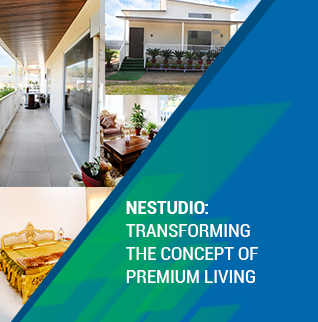
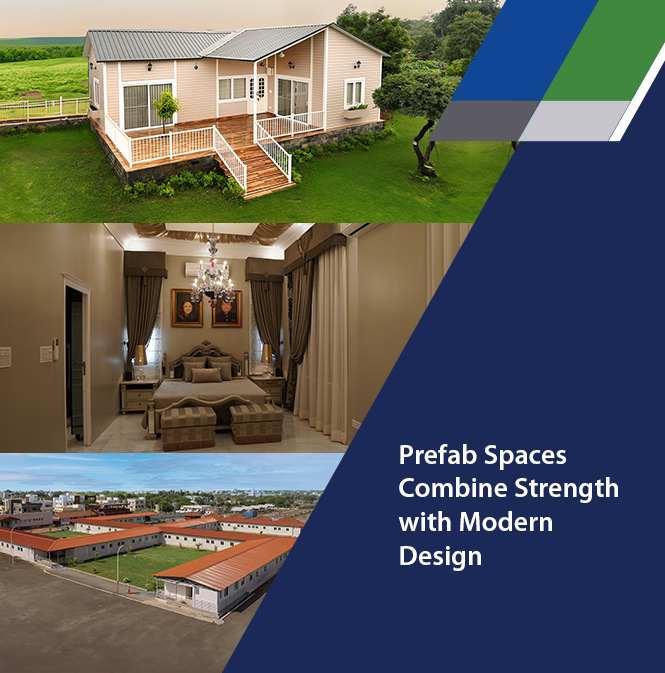
Tata Steel Nest-In's HabiNest (https://www.nestin.co.in/habinest) system covers the residential range this demand is searching for, with Nestudio addressing the premium end of the segment specifically. Every unit is manufactured under ISO 9001:2015-certified processes at registered manufacturing facilities, engineered to withstand earthquakes in Seismic Zones IV and V and resist wind speeds up to 240 km/hr, specifications that matter directly to homeowners building across India's more demanding geographies. EzyNest (https://www.nestin.co.in/ezynest) sanitation and the wider HabiNest range mean a homeowner is choosing a complete, factory-standard home rather than assembling one specification at a time.
Conclusion
The residential prefab opportunity in India is not a future market that needs to be created. It is a present one that has been searching for a credible answer and has not always found it easily. The manufacturing scale and brand equity to close that gap already exist within Tata Steel Nest-In; the task ahead is converting the awareness search behaviour has already demonstrated into a delivery experience homeowners trust.
Connect with us at 1800 208 8200 or visit www.nestin.co.in to explore Nest-In homes for your plot and location.
Sources
- Housing gap and affordable housing context: Pradhan Mantri Awas Yojana (Urban), Ministry of Housing and Urban Affairs (https://pmay-urban.gov.in/)
- Real estate transparency regulation: Real Estate (Regulation and Development) Act, 2016, India Code (https://www.indiacode.nic.in/handle/123456789/2158)
- Quality management certification: ISO 9001:2015
Posted in HabiNest on Aug 02, 2026.




Contact Us
Recent Post
What a Prefabricated House Costs in India: A Buyer's Guide to the Cost Structure
EV Charging Infrastructure: Why the Structure Around the Charger Decides the Rollout Speed
Modular Homes in India: How the Build Process Works from Plot to Handover
Why Hospitals and Healthcare Facilities Are Being Built Modular
Portable Toilets and Modular Sanitation Units in India: A Complete Buyer’s Guide
















































































Add comment